
Last Updated: October 23, 2026
Quick Summary
A gentle face wash is water-based and lifts light makeup, oil, and sweat, while a cleansing balm is oil-based and melts waterproof and long-wear formulas. Use a balm first for heavy makeup, then a gentle face wash to clear residue; light makeup days need only the wash.
- A balm needs a real emulsifier to turn milky and rinse clean without film.
- Massage a gentle face wash for 30 to 60 seconds, focusing on the T-zone.
- Use a nickel-to-quarter-sized balm scoop; a pea-sized amount of face wash is enough.
- Fragrance-free formulas on both sides are the safer default for sensitive skin.
- A second cleanse is worth it after waterproof eye makeup, long-wear foundation, or sunscreen.
Table of Contents
- Gentle Face Wash vs Cleansing Balm: The Core Difference
- Why a Cleansing Balm for Makeup Removal Excels at Heavy and Long-Wear Formulas
- When a Gentle Face Wash Is the Better Pick
- The Double Cleansing Routine, Explained
- How to Remove Waterproof Makeup Without Irritation
- Cleansing Balm vs Micellar Water: Where Each Fits
- Choosing by Skin Type, Texture, and Residue
- Conclusion
- Frequently Asked Questions
Gentle Face Wash vs Cleansing Balm: The Core Difference
The gentle face wash vs cleansing balm for makeup debate isn't really a contest. It's a question of what you're asking the product to do.
Water-based cleansers dissolve water-soluble grime; oil-based balms dissolve oil-soluble grime, and most makeup is oil-soluble by design. That's why a balm smears mascara into a soft blur while a gel cleanser mostly pushes it around.
How Each One Breaks Down Makeup
Surfactants are the molecules in a face wash that bind to oil and water at once, letting water carry grime off your skin. In a gentle face wash, they're chosen to be milder so the skin barrier stays intact.
A cleansing balm uses oils and emollients to dissolve makeup on contact, then relies on an emulsifier so it rinses clean.
Why a Cleansing Balm for Makeup Removal Excels at Heavy and Long-Wear Formulas
A cleansing balm for makeup removal outperforms water-based cleansers on heavy and long-wear formulas because oil dissolves oil. Foundation, silicone primers, cream blush, and waterproof mascara are built to resist water.
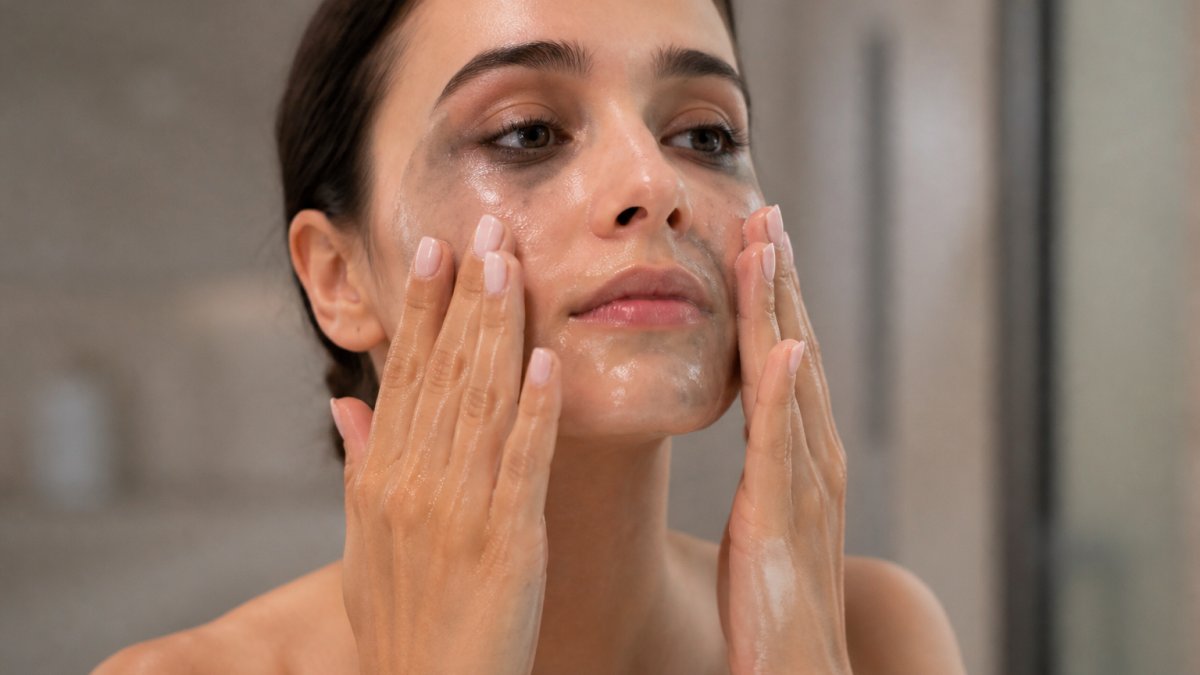
Texture matters: a balm starts solid and melts into a slick oil as it warms against your skin, letting you massage the eye area without tugging delicate tissue.
What most guides miss is the emulsifier step.
Waterproof and Eye Makeup
Waterproof and long-wear eye makeup is the clearest case for a balm. Waterproof formulas repel water, so a water-based cleanser struggles by definition, while a balm breaks the pigment down in seconds with gentle pressure.
Sensitive eyes still need care. Keep the balm on the lashes and lids, avoid pressing product into the lash line, and rinse with lukewarm water rather than hot.
When a Gentle Face Wash Is the Better Pick
A gentle face wash is the better pick when your makeup is light, your skin is oily or acne-prone, or you want a fast, low-mess cleanse.
It's also better for anyone who hates the feeling of oil on their skin; forcing balm texture leads to half-used jars, a real cost, not a preference to argue with.
One honest limitation: a gentle face wash is not a makeup remover for stubborn formulas. Expect it to fall short on waterproof mascara and transfer-proof foundation.
The Double Cleansing Routine, Explained
The double cleansing routine is a two-step cleanse: an oil-based first cleanse to remove makeup and sunscreen, followed by a water-based second cleanse to clear what's left. The first cleanse does the heavy lifting; the second handles sweat, excess oil, and residue.
Order matters: balm on dry skin first, massage, emulsify with water, rinse, then follow with your gentle face wash.
Readers often ask whether both steps are necessary. If you'd rather trim the process, our guide on how to simplify your skincare routine covers where to cut without losing the benefit. For the fuller picture, see how to build an effective skincare routine.
How to Remove Waterproof Makeup Without Irritation
Most guides treat "makeup" as one thing. It is not. Waterproof mascara, long-wear foundation, mineral powder, and tinted moisturizer each behave differently against a cleanser, and the right removal method changes with the formula.
Match the method to the makeup category
Long-wear and transfer-proof foundation. Silicone-based formulas resist water but dissolve readily in oil, so a balm handles them well.
Mineral makeup. Powder formulas sit on the surface and are largely water-dispersible, so a gentle face wash alone often handles them.
Light everyday makeup. Tinted moisturizer, a little concealer, and powder usually come off with a well-formulated gentle face wash.
Sunscreen. Modern mineral and chemical sunscreens are formulated to stay put, and many resist a water-only cleanse.
Step-by-step for a balm first cleanse
- Start with dry skin and dry hands. Water stops the oil from gripping the pigment.
- Use enough product. A nickel-to-quarter-sized scoop covers a full face; less and you will tug.
- Massage gently, in small circles. Roll over lashes and lids with fingertips, no pressing.
- Emulsify. Add a splash of lukewarm water to your palms, massage again until the balm turns milky.
- Rinse lukewarm. Hot water strips lipids and stings eyes.
- Follow with a gentle face wash to clear residue, especially around the hairline and jaw.
Step-by-step for a gentle face wash alone
- Wet the face with lukewarm water.
- Lather a pea-sized amount in your hands. More product does not remove more makeup; it just rinses away.
- Massage for 30 to 60 seconds, focusing on the T-zone and any areas with makeup.
- Rinse thoroughly, including the hairline and the sides of the nose where residue collects.
- Pat dry and follow with moisturizer while skin is still slightly damp.
Eye-area care
Sensitive eyes need the most caution. Keep balm on the lashes and lids rather than the lash line, rinse with lukewarm rather than hot water, and avoid rubbing. If eyes sting or water after removal, the cause is often product migration or too much pressure, not the makeup. A fragrance-free balm reduces one common trigger; if irritation persists, stop the product.
When a second cleanser is needed
A second cleanse is worth it after waterproof eye makeup, long-wear foundation, or sunscreen, or when the balm leaves a film. It's usually unnecessary on bare-skin or light-makeup days.
If your skin stings or feels tight afterward, the issue is often barrier disruption rather than the makeup itself. Our article on how to fix a damaged skin barrier walks through what to change.
Cleansing Balm vs Micellar Water: Where Each Fits
Cleansing balm vs micellar water is a question of format, not function. Micellar water uses tiny surfactant clusters suspended in water to lift makeup with a cotton pad. It's convenient, travel-friendly, and effective on light to medium makeup.
| Option | Best For | Makeup Strength | Skin Feel | Fuss Factor |
|---|---|---|---|---|
| Cleansing balm | Full-face, waterproof, SPF | Heavy to long-wear | Soft, sometimes filmy | Needs water and a rinse |
| Micellar water | Light makeup, travel, quick refresh | Light to medium | Fresh, low residue | Cotton pads, no rinse |
| Gentle face wash | Light makeup, oily and acne-prone skin | Light | Clean, not tight | Fastest, least mess |
| Gel cleanser | Normal to oily skin, warm weather | Light to medium | Cooling, clarifying | Fast, low residue |
Micellar water is not a substitute for a full cleanse on heavy makeup days. It's a bridge product, best used when you're traveling or too tired for a sink.
Choosing by Skin Type, Texture, and Residue
Skin type decides more of this than marketing does, but the useful comparison is at the ingredient level. Two balms can behave completely differently on the same face, and so can two gentle face washes, reading the label tells you more than the jar.
What to look for in a cleansing balm
A balm is only as good as its emulsifier system. Look for an oil phase such as caprylic/capric triglyceride, sunflower or jojoba oil, or squalane, paired with an emulsifier like polysorbate 80, polyglyceryl-4 oleate, or PEG-20 glyceryl triisostearate, those let the balm turn milky and rinse instead of leaving a film.
Fragrance is the other label item to check. "Fragrance" or "parfum" is a common trigger for reactive skin and appears in a lot of balms because the oil base carries scent well. Fragrance-free formulas exist in every price tier and are the safer default for sensitive skin.
What to look for in a gentle face wash
A gentle face wash is defined by its surfactant blend, not the word "gentle" on the front. Harsher cleansers lean on sodium lauryl sulfate (SLS), which is effective but can leave skin tight.
Watch for a low pH. Most skin sits around pH 4.5 to 5.5, and a cleanser close to that range is less likely to disrupt the barrier.
Skin type, matched to formulation
- Dry and mature skin: A balm with squalane or jojoba and a proper emulsifier supports moisture during the cleanse. Follow with a gentle, low-foam face wash rather than a foaming gel, which can compound dryness.
- Oily and acne-prone skin: A gentle face wash with sodium cocoyl isethionate or cocamidopropyl betaine clears daily oil without the occlusive feel some balms leave. If you wear heavy makeup, use a balm that rinses fully clean first, then follow with the wash.
- Combination skin: A balm on makeup days and a gentle face wash on bare-skin days is a common pattern. The formulation matters more than picking one category permanently.
Texture and residue
Texture is not cosmetic. A balm that leaves a film after rinsing will bother anyone who dislikes that feeling, no matter how well it removes makeup. The film usually means the emulsifier is weak or you're rinsing before adding enough water.
A gentle face wash should leave skin comfortable, not squeaky. The squeaky-clean feeling is a sign the surfactant has stripped surface lipids, and it often predicts tightness an hour later.
Packaging, hygiene, and cost per use
Jar balms require fingers or a spatula, raising hygiene questions, especially for anyone prone to breakouts; a pump or tube is more sanitary and easier to dose. Cost per use also shifts the math: a balm needs a full scoop (roughly nickel-to-quarter-sized) per use, while a gentle face wash needs a pea-sized amount, so a balm jar often runs out faster than a wash bottle of similar size.
If you are narrowing formats for reactive skin, our curated skincare for sensitive skin guide covers how to shortlist without trial-and-error buying.
Conclusion
The honest answer is that most people wearing makeup need both: a balm to dissolve the day and a gentle face wash to finish the job. The challenge is finding a pair that suits your skin without buying five products to get there.
That's the problem CHOSEN WELLNESS exists to solve. Our collection is thoughtfully curated rather than cluttered, organized so you can shop by goal and skip the endless scrolling, and if you're also building out the rest of your shelf, the PDRN Brightening Serum is a natural next step after cleansing. Start with our Start Here page to find the cleansers that fit your routine, then shop by goal and build from there.
Frequently Asked Questions
Is cleansing balm better than face wash?
Neither wins outright. A cleansing balm dissolves heavy, long-wear, and waterproof makeup plus sunscreen more effectively because its oil-based formula breaks down oil-soluble pigments and SPF. A gentle face wash is lighter, faster, and better suited to light makeup or bare-skin days. Many people get the best result by using a balm first, then a gentle face wash as a second cleanse to clear any oil residue.
Can a gentle face wash remove makeup on its own?
It depends on the makeup. A gentle face wash handles light makeup, tinted moisturizer, and daily buildup of dirt and excess oil reasonably well. It struggles with waterproof mascara, long-wear foundation, and heavy SPF. If you wear those regularly, pair the face wash with a cleansing balm or cleansing oil as a first cleanse so you are not scrubbing at your skin barrier.
Should you use a cleansing balm before face wash?
Yes, that is the standard double cleansing routine. Massage the balm onto dry skin to dissolve makeup and sunscreen, add a little water to emulsify it, rinse, then follow with a gentle face wash to remove any remaining oil residue. This order matters: the balm does the heavy lifting, and the face wash finishes the job without stripping your skin moisture.
Can cleansing balm clog pores?
A properly emulsified balm that you rinse off thoroughly is unlikely to clog pores, even on oily or acne-prone skin. The risk comes from skipping the rinse, leaving oil residue behind, or using a balm with heavy fragrances that irritate sensitive skin. Follow with a second cleanse if you are prone to breakouts, and patch test any new formula before using it on your full face.
The real work isn't choosing a side in the gentle face wash vs cleansing balm for makeup debate. It's matching the product to what's actually on your skin each night. Get that pairing right and the rest of your routine gets simpler. Explore the curated selection at CHOSEN WELLNESS and build a cleanse that fits your skin, not the other way around.
