
Last Updated: October 25, 2026
Quick Summary
The best skincare for combination skin is a gentle, pH-balanced gel cleanser, a lightweight gel cream or fluid moisturizer, and broad-spectrum sunscreen every morning. Treat each zone separately: niacinamide on the oily T-zone and hydrating serums on dry cheeks.
- Map your face with a tissue one hour after washing to find oily and dry zones.
- Choose a cleanser with a pH of roughly 4.5 to 5.5 and amino-acid surfactants.
- Use a BHA wash only two to three times a week on the T-zone.
- Introduce one new active at a time, following the eight-week schedule.
- Patch test new products on the jawline or inner forearm for 48 hours.
Table of Contents
- How to Identify Combination Skin
- The Best Cleanser for Combination Skin
- The Best Skincare Routine for Combination Skin, Step by Step
- Serums and Targeted Treatments for Combination Skin
- The Best Moisturizer for Combination Skin
- How to Layer Actives Without Irritating Combination Skin
- Adjusting Your Routine for Seasons, Sensitivity, and Acne
- Build Your Combination Skin Routine by Goal
- Frequently Asked Questions
How to Identify Combination Skin
Combination skin is a skin type with an oily T-zone and normal-to-dry cheeks, and it is the most common skin type dermatologists see. If your forehead and nose shine by noon while your cheeks feel tight after cleansing, you already have your answer.
The trick is treating two zones at once without stripping either one. Most routines fail here: a strong cleanser dries the cheeks, while a rich cream clogs the nose. Balance is the whole game.
The T-Zone and Cheeks: Mapping Your Oily and Dry Areas
Map your face before you buy anything. Wash your face, wait one hour without applying product, then press a tissue to your forehead, nose, chin, and cheeks.
Most people find the T-zone is oily and the cheeks are dry or normal. Some have an oily chin with dry temples. Your map decides which products go where, and it can change with the season.
The Best Cleanser for Combination Skin
The best cleanser for combination skin is a gentle, pH-balanced gel or low-foam formula that removes oil without leaving cheeks tight. Skip anything that squeaks. That feeling means you stripped the skin barrier, and oil glands respond by producing more. A common pattern dermatologists describe is that harsh cleansers make the oily zone oilier over time while the dry zone stays dry.
Selection Criteria: How We Judge a Cleanser
Before naming products, here is the shortlist logic. A cleanser earns a place on this list only if it meets all five criteria:
- pH range of roughly 4.5 to 5.5. Skin sits near pH 4.7; a cleanser in that range supports the acid mantle instead of stripping it.
- Surfactant type. Amino-acid or glucoside surfactants clean gently; traditional soap-based formulas (often labeled "cleansing bar" or "soap") raise pH and dry the cheeks.
- No drying alcohols. Denatured alcohol high in the ingredient list (INCI: alcohol denat.) strips the dry zone.
Comparative Shortlist by Texture, Concern, and Use Case
| Product type | Texture | Best for | Typical price band (USD) | Use case |
|---|---|---|---|---|
| Amino-acid gel cleanser | Light gel, low foam | Daily AM/PM, all zones | $12-$28 | Baseline cleanser for most combination skin |
| Cream-to-foam cleanser | Cream that lathers | Dry cheeks, normal T-zone | $18-$36 | Winter or dry-climate routine |
| Salicylic acid (BHA) wash | Gel with 0.5-2% BHA | Oily, clog-prone T-zone | $10-$24 | Two to three times weekly, T-zone only |
| Micellar water (rinse-off) | Watery | Makeup removal before cleanse | $8-$20 | First step on heavy-sunscreen or makeup days |
| Non-foaming milky cleanser | Lotion | Reactive or barrier-compromised skin | $16-$34 | AM cleanse when cheeks feel tight |
Prices reflect typical U.S. retail bands for drugstore through mid-tier formulas; luxury and clinical brands run higher. Cost per use matters more than sticker price: a $28 gel used twice daily for three months costs roughly $0.15 per cleanse, while a $12 bar that irritates the cheeks and gets abandoned costs more in the long run.
How to Use It Zone by Zone
- Morning: one gentle cleanse across the whole face with lukewarm water. If cheeks feel tight after cleansing, switch to a milky or non-foaming formula in the morning and save the gel for night.
- Evening: cleanse once to remove sunscreen and makeup, then a second gentle pass if residue remains. Double cleansing is fine as long as neither step strips the cheeks.
- BHA wash: use two or three times a week on the T-zone only, letting it sit 30 to 60 seconds before rinsing. Daily use across the whole face is the most common cause of flaking cheeks in combination skin.
The American Academy of Dermatology's face washing guidance recommends gentle, non-abrasive cleansers for daily use, which aligns with the low-foam, pH-balanced approach above.
The Best Skincare Routine for Combination Skin, Step by Step
A combination skin routine follows four steps: cleanse, treat, hydrate, protect. Morning routines focus on protection; evening routines focus on repair. Keep the order consistent and introduce one new product at a time so you can trace any reaction. The table below summarizes the whole routine, and the sections that follow break down each step with zone-specific application and a budget-tiered shortlist.
| Step | Morning | Evening | Frequency |
|---|---|---|---|
| Cleanse | Gentle gel cleanser | Gentle gel cleanser | Twice daily |
| Treat | Vitamin C serum | Retinol or niacinamide | Daily or alternate nights |
| Hydrate | Lightweight gel cream | Peptide moisturizer | Twice daily |
| Protect | SPF 50+ | None | Every morning |
Morning Routine: Cleanse, Treat, Hydrate, Protect
Start with a gentle cleanser, then a vitamin C serum to brighten and defend against environmental stress.
Zone-specific application. Apply the vitamin C serum across the whole face, but press the moisturizer more heavily into the cheeks and use a thin layer on the forehead and nose.
For the protect step, we recommend the La Roche-Posay Anthelios UVMune 400 SPF50+ Sunscreen Milk.
Evening Routine: Repair and Rebalance
At night, cleanse away sunscreen and oil, then apply your active of choice. A peptide or niacinamide serum supports repair while you sleep, and a moisturizer seals it in. If you use retinol, apply it three nights a week to start and follow with moisturizer.
Zone-specific application. Niacinamide goes on the T-zone and any enlarged pores; a hydrating serum goes on the cheeks.
Budget-Tiered Product Shortlist
Organizing by price band makes the routine actionable regardless of budget. Prices are typical U.S. retail bands; cost per use is estimated on a twice-daily routine over three months.
| Step | Budget tier (USD) | Mid tier (USD) | Premium tier (USD) | What to look for |
|---|---|---|---|---|
| Cleanser | $10-$18 | $18-$30 | $30-$50 | Amino-acid or glucoside surfactants, pH 4.5-5.5 |
| Vitamin C serum | $15-$25 | $25-$50 | $50-$90 | 10-15% L-ascorbic acid or a stable derivative |
| Niacinamide serum | $8-$15 | $15-$30 | $30-$55 | 4-10% niacinamide; avoid very high percentages on reactive cheeks |
| Moisturizer | $12-$22 | $22-$40 | $40-$70 | Gel cream or fluid, non-comedogenic, hyaluronic acid or peptides |
| Sunscreen | $10-$20 | $20-$35 | $35-$55 | Broad-spectrum SPF 30-50+, lightweight fluid or gel |
Cost per use is the honest comparison. A $22 gel moisturizer used twice daily for three months works out to roughly $0.12 per application; a $60 cream at the same cadence is roughly $0.33.
Pōrfectionist: 10% Niacinamide Serum →
A Safe Introduction Schedule for Actives
Layering too many actives at once is the most common reason combination skin routines fail. Use this schedule to introduce one product at a time:
- Weeks 1-2: gentle cleanser plus moisturizer plus sunscreen only. Establish a baseline.
- Weeks 3-4: add niacinamide in the morning, T-zone first, then whole face if tolerated.
- Weeks 5-6: add vitamin C in the morning, every other day, then daily.
If irritation appears at any step, drop back to the previous week's routine for two weeks before retrying. A simple log of what you used and how your skin responded makes this far easier to troubleshoot.
Serums and Targeted Treatments for Combination Skin
Serums let you treat each zone differently, which is the real advantage for combination skin. Niacinamide controls oil and refines pores in the T-zone, while hyaluronic acid floods dry cheeks with hydration.
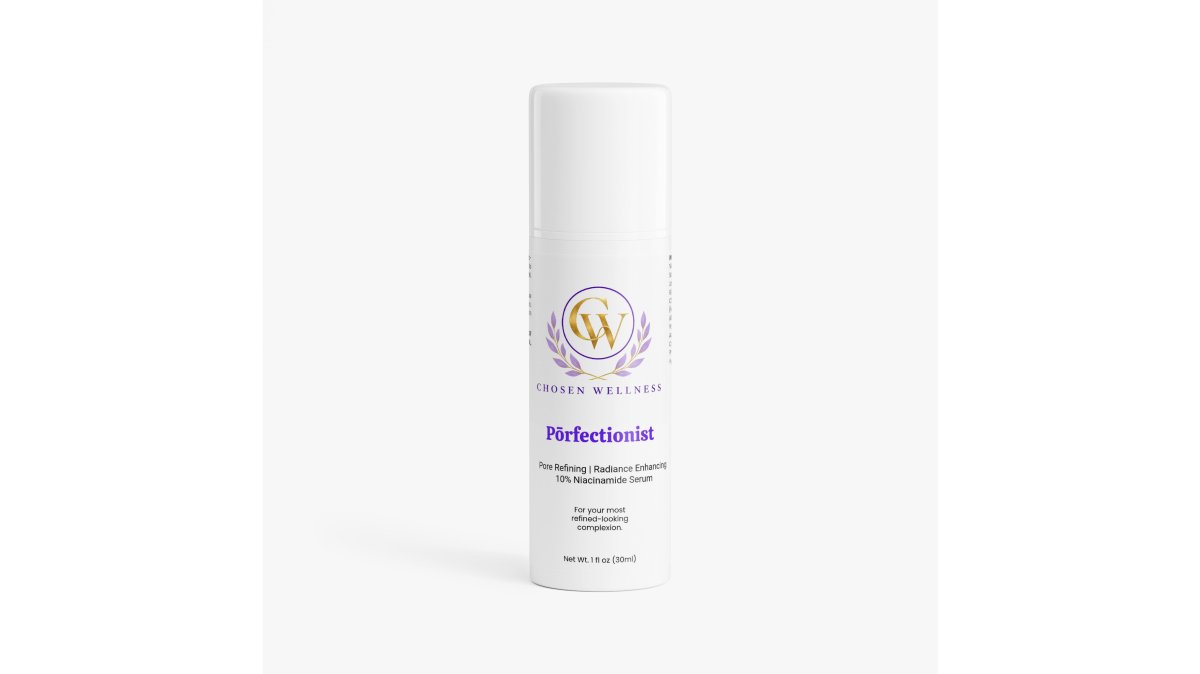
Our pick for oil control is the Pōrfectionist: 10% Niacinamide Serum, which targets enlarged pores and uneven tone while supporting the skin barrier. For dry patches, the 4D Hydra-Plump Hyaluronic Acid Serum uses four forms of hyaluronic acid to hydrate different layers of skin. If uneven tone and dullness are your main concern rather than oil, a brightening serum such as the PDRN Brightening Serum can slot into the treatment step, applied to the cheeks and any dark spots while you keep niacinamide on the T-zone.


The Best Moisturizer for Combination Skin
The best moisturizer for combination skin is a lightweight gel cream or fluid that hydrates without clogging pores. Heavy creams sit on the surface and trap oil in the T-zone.
Look for non-comedogenic formulas with hyaluronic acid or peptides. The Peptide Moisturizer pairs peptides with aloe and witch hazel for gentle hydration that suits all skin types, and it works morning or night.

How to Layer Actives Without Irritating Combination Skin
Layering actives is where most combination skin routines go wrong. The rule: one strong active per routine, introduced slowly. Retinol at night, vitamin C in the morning, and exfoliation two or three times a week is plenty.
Watch out: stacking retinol with strong acids in the same routine can leave skin red, flaky, and raw. If your barrier already feels compromised, read our guide on how to fix damaged skin barrier before adding anything new. The International Journal of Cosmetic Science research on niacinamide supports niacinamide's role in barrier support and oil regulation.
Adjusting Your Routine for Seasons, Sensitivity, and Acne
Your routine should shift with the weather and your skin's mood. Winter calls for a richer moisturizer and gentler cleansing; summer calls for lighter layers and more frequent sunscreen reapplication. Humid climates favor gels, dry climates favor creams.
Sensitive or acne-prone combination skin needs fragrance-free formulas and patch testing. Introduce one product every two weeks and keep a simple log of how your skin responds.
Build Your Combination Skin Routine by Goal
Build your routine around one primary goal, not five. If oil control is the goal, lead with niacinamide and a gel moisturizer. If hydration is the goal, lead with hyaluronic acid and a peptide cream.
At CHOSEN WELLNESS, we curate by goal so you skip the endless scrolling and find what truly works. Our Chosen Collection is organized around outcomes, and every product is chosen for results rather than trend appeal.
Frequently Asked Questions
What is the best ingredient for combination skin?
Niacinamide is the most versatile single ingredient for combination skin because it supports the skin barrier and helps balance the look of uneven tone and visible pores without heavy texture. Hyaluronic acid handles hydration on dry patches, while salicylic acid suits oily areas when used a few times a week. A 10% niacinamide serum applied to the whole face is a practical starting point, layered under a lightweight moisturizer.
How do I know if I have dry, oily, or combination skin?
Wash your face with a mild cleanser, wait 30 minutes without applying anything, then press a tissue to different zones. Shine on the forehead, nose, and chin with tighter cheeks points to combination skin. Shine everywhere suggests oily skin, and tightness or flaking everywhere suggests dry skin. Combination skin typically shows both at once, which is why one heavy cream or one stripping cleanser rarely works.
Should combination skin use a moisturizer?
Yes. Skipping moisturizer often pushes oil production up because dehydrated skin compensates. The key is the formula: a lightweight, non-comedogenic gel cream or lotion rather than a rich balm. Apply it to the whole face, and add a slightly thicker layer on dry patches such as the cheeks. A peptide moisturizer in a light base works for most combination skin types, morning and night.
How often should you exfoliate combination skin?
Two to three times a week is a sensible starting point, and you can treat zones differently. Use a leave-on salicylic acid product on the oily T-zone and a gentler option on the cheeks. A green tea exfoliating gel used once or twice weekly suits skin that reacts easily. Stop and reduce frequency if you notice stinging, tightness, or flaking, since that signals a compromised skin barrier.
Can you use different products on oily and dry areas?
Yes, and for combination skin it is often the smarter approach. Apply a niacinamide or salicylic treatment to the T-zone and a hydrating hyaluronic acid serum to the cheeks, then use one lightweight moisturizer across the whole face. Keep the cleanser and sunscreen the same everywhere. Zone-based layering lets you address excess oil and dry patches at the same time without buying two full routines.
Combination skin does not need a ten-step routine; it needs the right four products applied in the right order. If you are tired of guessing which formula suits your T-zone and cheeks, CHOSEN WELLNESS offers a curated, results-driven selection with shop-by-goal discovery and 30-day returns on unopened items. Get started with CHOSEN WELLNESS and build a routine that finally balances both zones.
