
Table of Contents
- The Real Question: Are Curated Beauty Boxes Worth It?
- How to Calculate Beauty Box Value for Money
- Beauty Subscription Box Pros and Cons
- Allure Beauty Box vs Ipsy: What the Comparison Actually Tells You
- Beauty Boxes for Sensitive Skin: What to Check Before You Subscribe
- Hidden Costs: Cancellation, Renewal, and Shipping Fees
- Subscription Boxes vs Buying Products Individually
- Frequently Asked Questions
Last Updated: October 18, 2026
The Real Question: Are Curated Beauty Boxes Worth It?
Are curated beauty boxes worth it? Only if the products you actually use cost less than the box. That is the whole answer, and most reviews bury it under a list of unboxing photos. At CHOSEN WELLNESS, we watch customers wrestle with this exact question, and the honest version comes down to math, not marketing.
Here is the part most guides get wrong: a box is not a bargain because it contains a lot of product. It is a bargain when it contains product you would have bought anyway, at a price below what you would have paid. Everything else is clutter in a pretty box.
Below, we break down how to run that calculation, where subscription terms bite, and when buying individually wins outright.
How to Calculate Beauty Box Value for Money
Beauty box value for money is the retail value of the products you will genuinely use, divided by what you paid, including shipping. Not the total stated value. The used value.
Here is the formula we would use:
(Sum of full retail prices of products you will finish) ÷ (Box price + shipping + tax) = Real value multiple
A box advertised at three times its price in retail value can land below 1.0 once you subtract the items you will never open. That is not a scam. It is just arithmetic that the marketing copy leaves out.
The Cost-Per-Use Math Most Reviews Skip
Cost per use is the only number that lets you compare a subscription to buying singles. A full-size serum you use twice a week for four months costs far less per application than a sample sachet you use once and toss.
Run it this way for each product:
- Full-size item: Retail price ÷ estimated number of uses = cost per use
- Sample-size item: Retail price of the full size ÷ (uses in the sample) = cost per use
- Unused item: Cost per use is infinite, because you paid and got nothing
Add the cost per use across everything you finished, then compare that total to buying the same categories one at a time. If the box total is lower, it is worth it. If it is higher, you are paying for the surprise, not the product.
Beauty Subscription Box Pros and Cons
The pros and cons of a beauty subscription box come down to discovery versus control. You trade certainty for variety, and the trade only pays off if variety is what you actually need. Most guides stop there. The useful version separates the pros and cons that are real from the ones that are marketing.
Pros that hold up under scrutiny:
- Product discovery without full-size commitment. A sample or deluxe-size item lets you test a texture, finish, or formula for a week or two before spending full retail. That is genuine value if you would otherwise buy a full size and abandon it.
- Exposure to brands outside your usual search. Curation surfaces lines you would not find by scrolling a retailer's bestseller list, which matters most when you are rebuilding a routine.
- A structured cadence. A box that arrives on a schedule creates a natural checkpoint to review what you have, what you finished, and what you are missing.
- Lower cost per item when you use everything. This is the only pro that survives the math in the value section above. It is conditional, not automatic.
Cons that actually cost you money:
- You do not choose the specific products. Even personalized quizzes select from a pool, so the match is only as good as the profile and the pool behind it.
- Unwanted items quietly raise your real cost. Every product you never open is money spent with no return, and it inflates the effective price of the items you do use.
- Renewal and cancellation terms can trap the inattentive. Annual plans, notice windows, and minimum commitments are covered in the hidden-costs section below, and they decide more outcomes than the sticker price.
- Sensitive skin has little room for surprise. A reactive complexion needs predictable ingredients, not a new fragrance or essential oil every month.
- Storage and clutter. A monthly box produces a steady inflow of bottles and jars. If your shelf is already full, the box adds inventory you did not plan for.
The decision rule that replaces the generic list: subscribe only if at least half of each box's contents fall into categories you already buy, and if the cost per use of those items beats buying singles. If you cannot name the categories you will use before the box arrives, you are paying for surprise, not product. That is a legitimate reason to subscribe, but it is an entertainment budget, not a beauty budget, and it should be counted as such.
Allure Beauty Box vs Ipsy: What the Comparison Actually Tells You
The Allure Beauty Box vs Ipsy comparison matters less than the question underneath it: do you want editorial curation or algorithmic personalization? Allure leans on a fixed, editor-chosen lineup. Ipsy leans on a profile quiz that shapes each bag.
That difference drives everything else. Editorial curation gives you consistency and a known point of view. Personalized selection gives you variety tuned to your answers, but the match is only as good as the profile you fill in.
Neither model solves the core problem. Both still send you products you did not pick, and both still count on you using most of what arrives. If your skin is reactive or your routine is already set, the model matters far less than the return policy and the cancellation terms.
What we would check before choosing either: can you skip a month, can you see the contents before it ships, and what happens to your card when you forget to cancel.
Beauty Boxes for Sensitive Skin: What to Check Before You Subscribe
Beauty boxes for sensitive skin require a stricter filter than any general subscription offers. The box has to be predictable, or your skin pays for the surprise. Most guides list "check the ingredients" and stop.
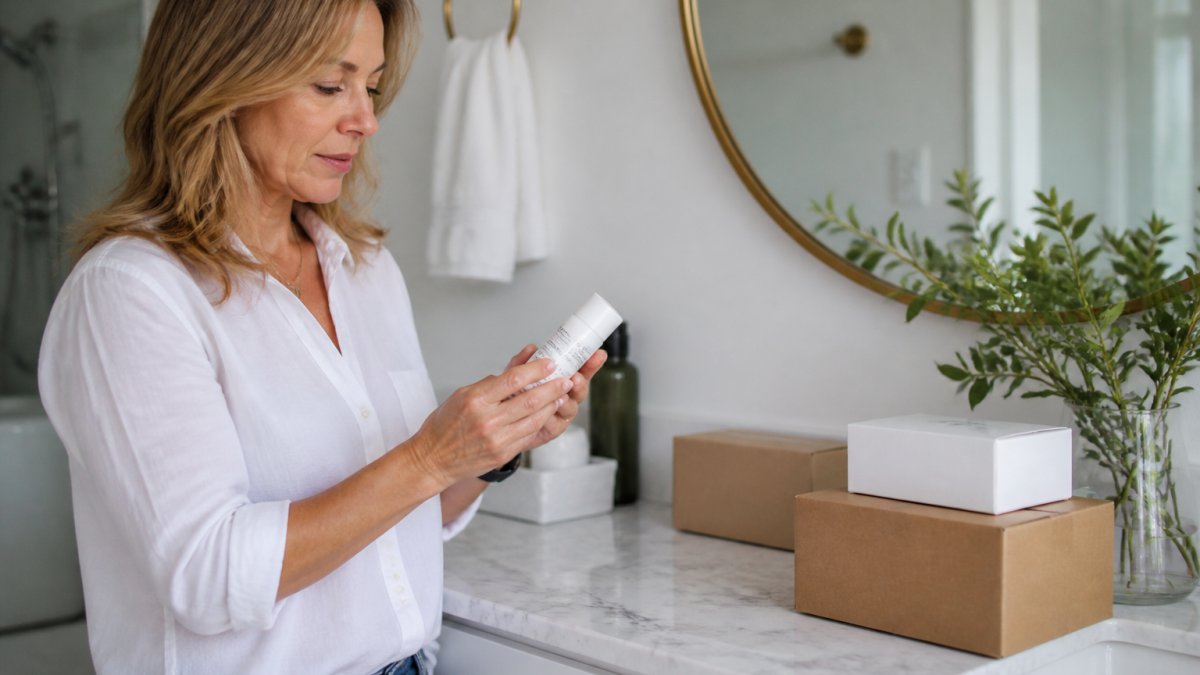
Ingredient triggers to screen for. Fragrance and essential oils are the most common culprits in reactive skin, followed by drying alcohols, strong exfoliating acids, and preservatives that some people react to.
The patch-test protocol. You need time to test on your inner arm or behind your ear before committing to a full routine.
Skip, pause, and return terms. Reactive skin needs the ability to sit out a month without penalty. Check whether you can skip a cycle, pause the subscription, and return unopened items within a stated window.
Allergy disclosure. If you have a known allergy, confirm whether the service lets you exclude ingredients or categories in your profile.
Hidden Costs: Cancellation, Renewal, and Shipping Fees
Hidden costs decide whether a beauty box is worth it far more often than the sticker price does. Shipping, tax, auto-renewal, and cancellation friction all sit on top of the advertised number.
Watch for these:
- Shipping added at checkout. A low monthly price with shipping tacked on can erase the discount.
- Auto-renewal on annual plans. A yearly plan charges the full amount up front and often renews silently.
- Cancellation windows. Some services require notice days before the next billing date. Miss it and you pay for another cycle.
- Minimum commitment. A "cancel anytime" label sometimes hides a three-month minimum.
The fix is simple. Put the renewal date in your calendar the day you subscribe, and read the cancellation clause before you enter your card.
Subscription Boxes vs Buying Products Individually
Buying individually wins whenever you know what your skin needs. A subscription wins when you are still discovering what works.
Here is how the two compare on the factors that actually decide it:
| Factor | Subscription Box | Buying Individually |
|---|---|---|
| Product choice | Curated for you, limited control | Full control |
| Cost per item | Lower when you use everything | Higher per item, no waste |
| Discovery | High, new brands each cycle | Low unless you research |
| Waste risk | Higher, unwanted items pile up | Minimal |
| Routine fit | Generic to your profile | Exact to your needs |
| Commitment | Recurring charge | One-time purchase |
A middle path works better than either extreme. Buy your known essentials individually, and use a curated selection to fill the gaps in your routine. That is how we approach it at CHOSEN WELLNESS: shop by goal, pick the set that matches your concern, and skip the guessing. A complete set like our Complete Skincare Set covers a full routine in one purchase, so you are not stacking a subscription on top of products you already own. If you would rather build your own edit, The Chosen Collection lets you browse by concern and choose only the items you will actually finish, the same discipline that makes a box worth it, applied without the surprise.

For anyone weighing the environmental angle, the calculation is the same. Unused products and excess packaging are waste you paid for. Buying only what you finish is the greener choice, box or no box.
Frequently Asked Questions
Are beauty subscription boxes worth the cost?
It depends on how much of each box you actually use. A $25 monthly box only pays off if the products inside are ones you would have bought anyway. Do the math on retail value versus what you spend, then subtract anything you set aside unused. Curated beauty boxes tend to work best for people who enjoy trying new formulas and will use samples within a few weeks. If you already have a full shelf of half-used products, a one-time curated set is often a smarter buy than a recurring plan.
How do you calculate the value of a beauty box?
Start with the combined retail price of the products, then divide by the subscription cost to get a ratio. A box with $90 of product for $30 looks like a 3x value, but that only counts if you would use all of it. A more honest number is cost per use: divide the subscription price by the number of products you finish. If you use three of eight items, your effective cost per used product triples. Track one or two boxes this way before committing to an annual plan.
Can you choose the products in a beauty subscription box?
Some programs let you pick a category, a shade, or one item per month, while others send a fixed selection. If control matters to you, look for boxes that ask about skin type, concerns, and preferences at signup, or that offer a shop-by-goal model where you choose the outcome you want. Reading the fine print on customization before you subscribe saves you from a year of products that don't match your routine.
Are beauty boxes a good way to discover skincare for sensitive skin?
They can be, but only if you check ingredients before applying anything. Patch-test every new product on your inner forearm for 24 to 48 hours, and introduce one new item at a time so you can identify a reaction. Look for boxes that disclose full ingredient lists and let you exclude fragrances or known irritants. If a box won't tell you what's inside before it ships, that's a reason to skip it.
The real challenge is not finding more products. It is finding the few that work for your skin and your routine, then buying only those. CHOSEN WELLNESS is built for that: a thoughtfully curated, results-driven selection you can filter by goal, with 30-day returns on unopened items so a wrong pick is recoverable. Skip the endless scrolling and shop by goal to build a routine that earns its place on your shelf.