
Table of Contents
- Why Getting Expert Skincare Advice Online Beats Trial and Error
- How to Find a Qualified Skincare Professional for an Online Skincare Consultation
- How to Prepare for Your Online Skincare Consultation
- What to Expect During a Personalized Skincare Routine Consultation
- How to Introduce New Skincare Products Without Irritation
- Building Your Morning and Evening Skincare Routine
- Consultation Costs, Privacy, and Safety: What You Need to Know
- Conclusion
- Frequently Asked Questions
Last Updated: October 16, 2026
Why Getting Expert Skincare Advice Online Beats Trial and Error
Most people who want to get expert skincare routine advice online start by guessing instead.
Getting expert skincare routine advice online changes that.
At CHOSEN WELLNESS, we hear the same frustration every week: too many products, too little guidance.
The trial-and-error cycle costs more than money. It costs time, confidence, and sometimes your skin barrier.
Here's what most guides get wrong: they treat online advice as a shortcut. Done properly, it's a full assessment.
How to Find a Qualified Skincare Professional for an Online Skincare Consultation
The best place to start is a licensed professional with verifiable credentials.
For medical concerns like acne, rosacea, or persistent irritation, look for a dermatologist. For routine building and product selection, a licensed esthetician often fits better and costs less.
Before you book, check these things:
- A state license number you can look up
- A professional directory listing or board certification
- Reviews that mention clear, patient explanations
- A stated scope of practice on their website
The American Academy of Dermatology's find-a-dermatologist tool lets you search board-certified dermatologists by location and specialty. State licensing boards also publish verification lookups for estheticians.
A common mistake is booking the cheapest option without checking credentials. Skill and experience vary widely in this field. A short verification step protects you.
Match the Credential to the Concern
Not every professional is licensed to do the same things. Knowing the difference prevents wasted sessions and unsafe advice.
- Board-certified dermatologist, a physician who completed medical school, a residency in dermatology, and passed board exams. Can diagnose and treat medical skin conditions, prescribe medication, and order lab work or biopsies. Best for acne that scars, suspected eczema or psoriasis, hair loss, and any lesion that changes shape or color.
- Licensed esthetician, trained in skin care and licensed by a state board, typically after a set number of training hours and a practical exam. Can analyze skin, recommend products, and perform facials and some treatments, but cannot diagnose disease or prescribe. Best for routine design, product selection, and maintenance.
- Certified skincare specialist or coach, credentials vary widely and are often issued by private programs rather than state boards. Useful for general guidance, but treat the title with more scrutiny. Ask who issued the certification and what training it required.
How to Verify Before You Pay
Verification takes a few minutes and is the single best protection against bad advice.
- Ask for the license type and number in writing before booking.
- Look up that number on the relevant state licensing board's public lookup tool.
- Confirm the name on the license matches the person you'll be speaking with.
- Check the license status, active, expired, or under discipline.
- For dermatologists, confirm board certification through the American Board of Dermatology or the American Academy of Dermatology directory.
Red Flags to Walk Away From
- No license number offered, or a vague answer when you ask
- A guarantee of specific results in a set number of days
- A recommendation that starts with a product to buy rather than questions about your skin
- Pressure to purchase a bundle during or immediately after the consult
- No written summary of what was discussed
What to Ask in a Short Screening Message
A quick message before you book tells you a lot. Try: "What's your license type and number, and what does a typical consultation cover?" A qualified professional answers plainly. If the reply is evasive or pushes a package, keep looking.
How to Prepare for Your Online Skincare Consultation
Preparation makes or breaks your session. Gather your current products, note your concerns, and take clear photos in natural light before the call.
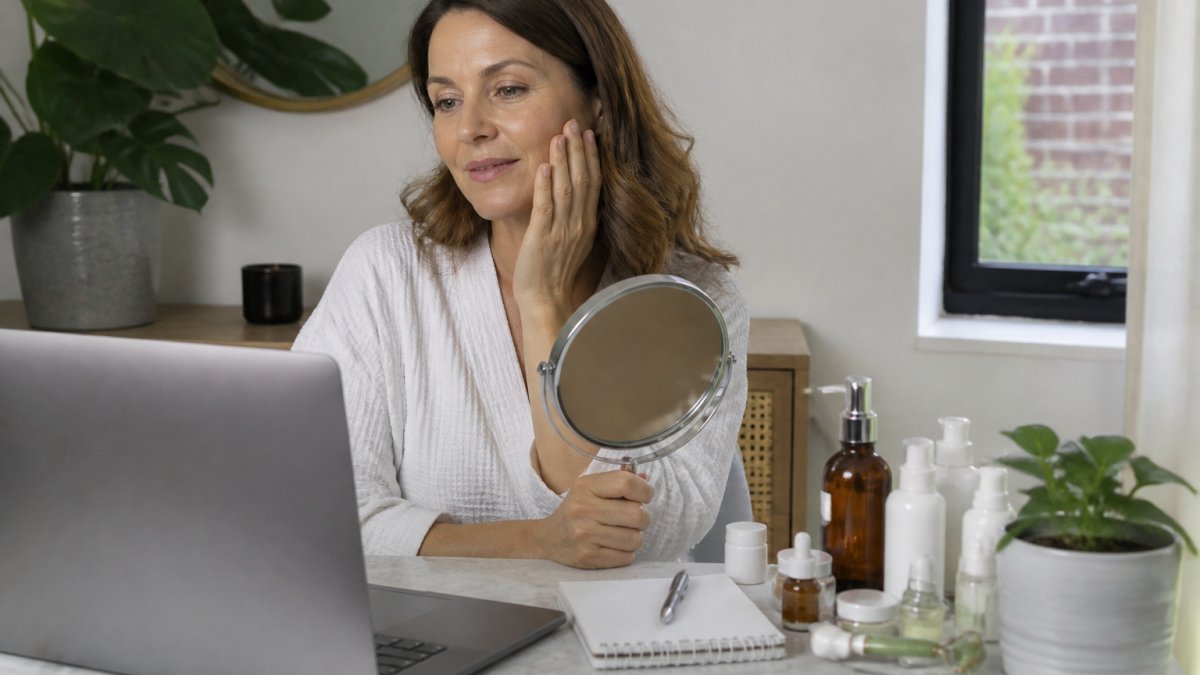
Good preparation saves time and leads to sharper advice. Here's a simple checklist:
- List every product you currently use, morning and night
- Note how long you've used each one
- Write down your top three skin concerns
- Take photos in daylight, no makeup, no filter
- List any medications or known allergies
- Prepare questions about ingredients you've reacted to
Also think about your daily habits. Sleep, stress, water intake, and sun exposure all shape your skin. A professional uses this context to spot contributing factors.
Video consultation platforms work well for this. Test your camera and lighting beforehand. A clear image helps the expert assess texture and tone.
What to Expect During a Personalized Skincare Routine Consultation
When you get expert skincare routine advice online, a personalized skincare routine starts with questions, not products.
Expect the session to cover:
- Your skin type and current condition
- Ingredient sensitivities and past reactions
- Lifestyle factors that affect your skin
- A proposed routine with specific steps
- Product categories suited to your needs
Good professionals explain the why behind each recommendation. They'll tell you which ingredient targets which concern and how long results take.
This is where a systems approach helps. Skin health involves many interrelationships: barrier function, hydration, sun damage, and hormones all connect.
You should leave with a written plan. If you don't, ask for one. A clear routine you can follow beats vague advice you'll forget by dinner.
How to Introduce New Skincare Products Without Irritation
Add one new product at a time, and wait before adding the next. This is the single most important rule when you introduce new skincare products.
Your skin needs time to adjust. A common approach is to test a new product for one to two weeks before layering in another. If irritation appears, you know exactly what caused it.
Follow these steps:
- Patch test on your inner forearm first
- Start with every other day, not daily
- Apply a small amount, not a full pump
- Watch for redness, stinging, or flaking
- Stop immediately if irritation worsens
Active ingredients like retinol and acids need a slower ramp-up than basic moisturizers. Many people quit actives too soon because they started too fast.
Building Your Morning and Evening Skincare Routine
A morning and evening skincare routine doesn't need ten steps. It needs the right steps, done consistently.
Morning focuses on protection. Evening focuses on repair. That's the core logic.
| Time | Step | Purpose |
|---|---|---|
| Morning | Gentle cleanser | Remove overnight buildup |
| Morning | Antioxidant serum | Shield against daily stressors |
| Morning | Moisturizer | Lock in hydration |
| Morning | Sunscreen | Prevent UV damage |
| Evening | Cleanser | Remove dirt and sunscreen |
| Evening | Treatment serum | Target specific concerns |
| Evening | Moisturizer | Support overnight repair |
For mornings, a vitamin C serum pairs well with sunscreen. Our Environmental Protection Agency sun safety guidance explains why daily UV protection matters for long-term skin health.
For evenings, look at targeted treatments. Our Vitamin C Serum supports a brighter complexion, while the PDRN Brightening Serum delivers deep hydration with peptides for a more luminous look.


If you want a complete starting point, the Complete Skincare Set bundles a full regimen with active ingredients like hyaluronic acid, retinol, and ceramide.

Consistency beats complexity. A simple routine you follow daily outperforms an elaborate one you skip.
Consultation Costs, Privacy, and Safety: What You Need to Know
Online consultations vary widely in cost, so ask about pricing upfront. Many platforms list fees before booking, and some insurance plans cover dermatology visits.
Privacy matters too. Your photos and health details are sensitive. Check the platform's privacy policy before uploading anything. Reputable services explain how they store and share your data.
The Federal Trade Commission's guidance on health privacy outlines your rights around personal health information shared with apps and online services.
On safety, know the limits of online care. A video visit works well for routine advice.
What Consultations Typically Cost
Pricing depends on the professional's credentials and the format. As a general pattern:
- Esthetician routine consults, often the lowest cost, frequently bundled with a product purchase or offered as a flat session fee.
- Dermatologist telehealth visits, priced higher, and more likely to be covered in part by insurance when the visit is for a medical concern rather than cosmetic advice.
- Subscription platforms, charge a recurring fee for ongoing messaging access, which can be useful for follow-up but adds up over time.
Before you pay, confirm three things: the total fee, whether follow-up questions are included, and whether the fee is refundable if you cancel. If a platform won't state the price until after you create an account, treat that as a caution sign.
How Your Data Should Be Handled
Your photos, skin history, and medications are sensitive. A trustworthy service should:
- State clearly what it collects and why
- Explain how long it keeps your photos and records
- Tell you whether data is shared with third parties, and for what purpose
- Offer a way to request deletion of your information
- Use secure transmission for photos and messages
Read the privacy policy before you upload anything. If you can't find one, or it's vague about sharing, look elsewhere. For health information shared with apps and online services, the FTC publishes guidance on your rights.
When Online Advice Isn't Enough
A video consult is well suited to routine building, product selection, and mild concerns. It is not a substitute for an in-person exam in these cases:
- A mole or spot that is new, changing, bleeding, or asymmetrical
- A rash that spreads quickly or comes with fever
- Severe swelling, blistering, or signs of infection
- Sudden hair loss or scalp changes
- Any reaction that affects breathing or swallowing, seek emergency care immediately
If a professional you're consulting online can't see something clearly, they should say so and refer you for an in-person visit. That honesty is a sign of a good practitioner, not a limitation.
Questions to Ask About Safety and Scope
- Can you diagnose conditions, or only advise on routine?
- What happens if you see something concerning in my photos?
- Do you coordinate with in-person providers if I need a referral?
- How do you handle a reaction to something you recommended?
Conclusion
Building a routine that works takes guidance, not guesswork. The right expert, a prepared session, and a simple plan can replace years of trial and error.
At CHOSEN WELLNESS, we curate results-driven skincare so you skip the endless scrolling. Our shop-by-goal approach helps you find products matched to how you want to look and feel, backed by a 30-day return policy on unopened items.
Get started with CHOSEN WELLNESS and build a routine that finally fits your skin.
Frequently Asked Questions
How can I get expert advice on my skincare routine online?
Start by identifying your primary skin concern, then look for licensed estheticians or dermatologists who offer virtual appointments. Many platforms connect you with professionals who review photos and questionnaires to recommend products. A good consultation includes a personalized skincare routine with specific product types, application order, and frequency. Expect to pay $50 to $200 per session depending on the provider's credentials. Always verify state licensure before booking.
What information should I share to get personalized skincare advice?
Share your skin type (oily, dry, combination, sensitive), current products and how long you've used them, any reactions you've experienced, medications that affect skin, and your main concerns like fine lines or dark spots. Mention your budget and how much time you'll realistically spend on a routine. Photos in natural light help professionals assess texture and tone. The more detail you provide, the more tailored your personalized skincare routine will be.
How do I know if online skincare advice is trustworthy?
Check credentials: licensed estheticians have state board certification, and dermatologists are medical doctors. Look for recommendations based on research findings and established ingredients like retinol, hyaluronic acid, or vitamin C, not just trends. A trustworthy professional explains why each product fits your skin and warns about potential interactions. Avoid anyone who guarantees overnight results or pushes a single brand without assessing your needs first. Legitimate experts encourage questions and follow-up.
When should I see a dermatologist instead of seeking general skincare advice online?
See a dermatologist for persistent acne, suspicious moles, severe rosacea, eczema flare-ups, or any condition that hasn't improved after eight to twelve weeks of consistent over-the-counter care. Dermatologists can prescribe medications and perform procedures that estheticians cannot. Online consultations work well for routine building, product selection, and mild concerns. If you notice rapid changes in a mole or experience pain, bleeding, or sudden swelling, seek in-person medical care promptly.